Local Business GEO Guide: Dominate AI Search in Your Area
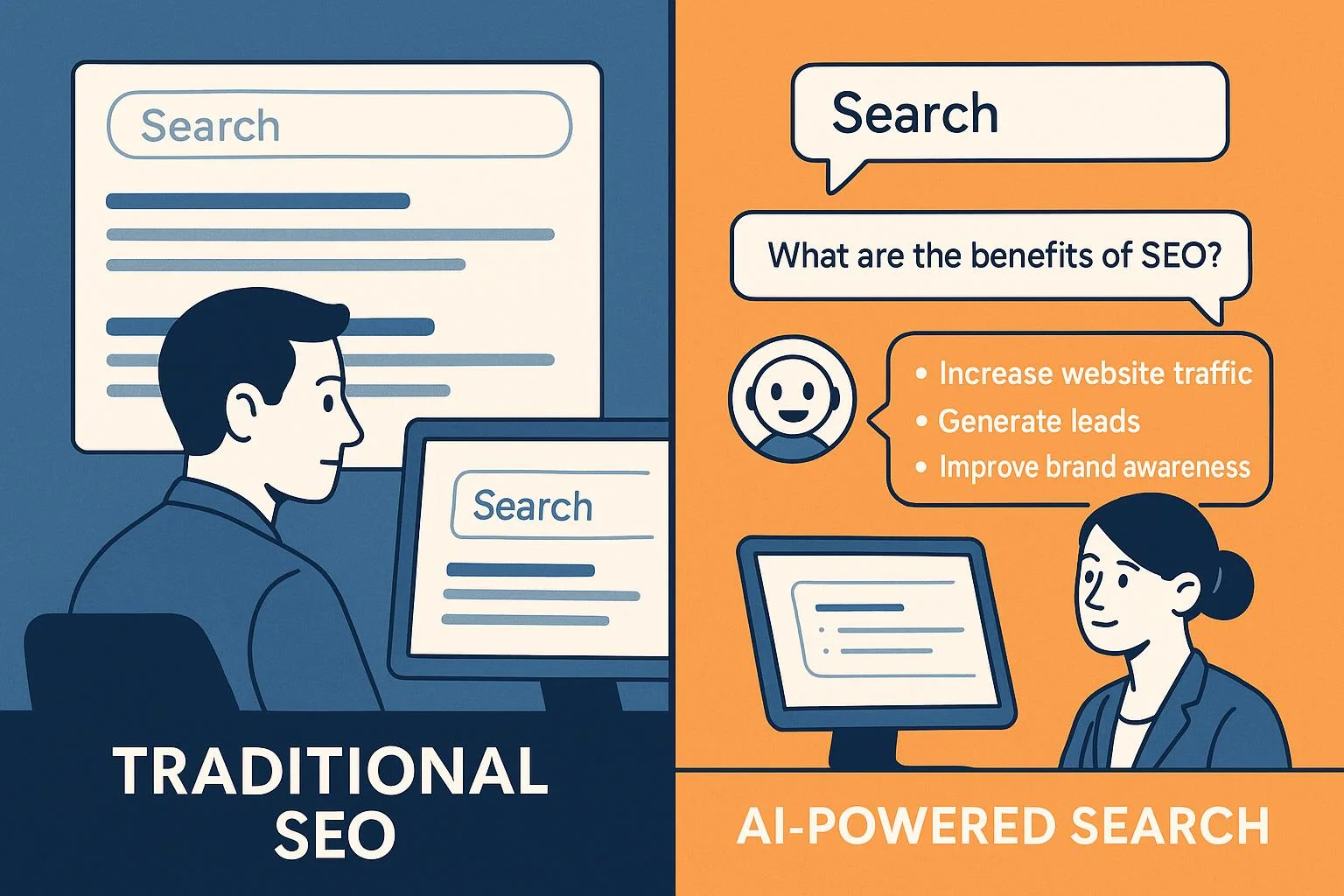
When someone new to your area asks ChatGPT "What's the best Italian restaurant in downtown Seattle?" or "Find me a reliable plumber near Capitol Hill," AI assistants are increasingly providing direct recommendations instead of just listing search results. For local businesses, being recommended by AI assistants represents a powerful new channel for customer acquisition—one that reaches high-intent customers at the exact moment they're looking for services in your area. This comprehensive guide shows local business owners how to optimize for AI-powered local discovery and dominate AI search in their market.
Why Local Businesses Need GEO Now
Local search is undergoing a fundamental transformation. Traditional local SEO focused on ranking in Google's local pack and Google Maps results. While these remain important, an increasing number of consumers are bypassing Google entirely and asking AI assistants for recommendations. This shift is particularly pronounced among younger demographics and tech-savvy consumers who trust AI to filter through hundreds of options and surface the best choices.
The stakes are high for local businesses. When ChatGPT recommends three restaurants for a dinner reservation or Perplexity suggests two plumbers for an emergency repair, those businesses receive highly qualified leads at zero acquisition cost. Conversely, businesses that aren't visible to AI assistants are missing out on an increasingly large segment of potential customers. The gap between AI-visible and AI-invisible local businesses will only widen as AI adoption accelerates.
The Local Business Advantage in GEO
Local businesses have several natural advantages when it comes to Generative Engine Optimization. First, local searches have clear, specific intent—customers need services in a defined geographic area, making it easier for AI systems to provide relevant recommendations. Second, local businesses typically have strong review signals from Google, Yelp, and other platforms that AI systems heavily weight. Third, local search queries often include qualifiers like "best," "reliable," or "affordable" that AI systems can match to review sentiment and business attributes.
Most importantly, local business competition is geographically constrained. You're not competing with every business in your industry globally—you're competing with businesses in your immediate area. This makes it feasible for small businesses to achieve dominant AI visibility in their local market through focused, systematic optimization. A well-optimized local business can outrank national chains in AI recommendations by demonstrating superior local expertise, stronger community ties, and more authentic customer relationships.
Local Business GEO Metrics
| Metric | What It Measures | Target |
|---|---|---|
| Local Mention Rate | % of local category queries where you appear | 30-50% |
| Recommendation Position | Your position in AI recommendation lists | Top 3 |
| Service Area Accuracy | % of times AI correctly identifies your service area | 95%+ |
| Hours/Contact Accuracy | % of times AI provides current hours and contact info | 100% |
| AI Referral Calls | Phone calls from AI assistant recommendations | 10-25% of total |
| AI-Driven Foot Traffic | In-person visits from AI recommendations | 15-30% of new |
The Local Business GEO Framework
Optimizing local businesses for AI discovery requires a systematic approach across five key areas. Unlike traditional local SEO where Google Business Profile optimization alone could drive significant results, GEO demands a comprehensive strategy that builds authority, generates authentic signals, and ensures AI systems have accurate, detailed information about your business.
1. Google Business Profile Optimization
Your Google Business Profile remains the foundation of local AI visibility. AI systems heavily rely on Google's local business data when making recommendations. Ensure your profile is 100% complete with accurate business name, address, phone number, website, hours, categories, and service areas. Add comprehensive business descriptions that explain what you do, who you serve, and what makes you different from competitors. Use natural, conversational language that matches how customers ask questions.
Select all relevant categories for your business, with your primary category being the most specific, accurate description of your core service. Add secondary categories that cover additional services you offer. Categories directly influence when AI systems recommend your business—if you're a restaurant that also offers catering, include both "Restaurant" and "Caterer" categories so you appear in recommendations for both types of queries.
Upload high-quality photos regularly—at least 10-15 photos showing your location exterior, interior, products, services, and team. AI systems use visual information to understand your business and verify authenticity. Include photos that showcase your unique attributes: if you're a restaurant with a beautiful patio, make sure you have multiple patio photos. If you're a salon with a specific aesthetic, show it through professional interior shots. Update photos seasonally to demonstrate that your business is active and current.
2. Review Generation and Management
AI assistants rely heavily on customer reviews when making local business recommendations. Your review volume, average rating, review recency, and review content all influence AI recommendation likelihood. Focus on generating consistent, detailed reviews that explain specific experiences and results. Generic "Great service!" reviews provide minimal value—you want reviews that say "Sarah did an amazing job on my highlights, she really listened to what I wanted and the color turned out exactly right. The salon is clean and comfortable, and I appreciated the complimentary beverage while I waited."
Implement a systematic review collection process. Train staff to ask satisfied customers for reviews at the end of positive interactions. Send automated review requests via email or SMS 24-48 hours after service completion. Make leaving reviews easy by providing direct links to your Google, Yelp, and Facebook review pages. The goal is consistent review generation—aim for at least 5-10 new reviews per month, depending on your business size and transaction volume.
Respond to every review within 24-48 hours with personalized, thoughtful responses. Thank customers for positive reviews and mention specific details from their feedback to show you're genuinely engaged. For negative reviews, apologize sincerely, address the specific concerns raised, and offer to make things right. AI systems notice response patterns and view responsive businesses more favorably. Your responses also provide additional context that AI systems consider when evaluating your business reputation.
3. Website Content and Local Authority
Create comprehensive website content that establishes your local expertise and helps AI systems understand what you offer. Develop detailed service pages for each service you provide, explaining what's included, who it's for, how long it takes, and what results customers can expect. Write in natural, conversational language that matches how customers ask questions. If you're a plumber, don't just list "drain cleaning"—explain "Emergency Drain Cleaning Services: 24/7 Response for Clogged Sinks, Toilets, and Main Lines in Seattle."
Create location-specific content for each area you serve. If you're a contractor serving multiple neighborhoods, create dedicated pages for "Kitchen Remodeling in Capitol Hill," "Bathroom Renovation in Ballard," etc. These pages should include neighborhood-specific information, local project examples, and community connections. This helps AI systems understand your service area and recommend you for geographically specific queries.
Publish educational content that demonstrates your expertise and helps potential customers make informed decisions. Write blog posts answering common questions: "How to Choose a Plumber: 10 Questions to Ask Before Hiring," "What to Expect During a Kitchen Remodel: Timeline and Process," or "Signs You Need Emergency Electrical Service." This content serves dual purposes—it provides value to potential customers and gives AI systems authoritative content to cite when making recommendations.
4. Local Citations and Directory Presence
Maintain consistent, accurate business information across all local directories, review platforms, and citation sources. AI systems synthesize information from multiple sources, and inconsistencies in your business name, address, phone number, or hours reduce AI confidence in recommending you. Ensure your NAP (Name, Address, Phone) is identical across Google Business Profile, Yelp, Facebook, Bing Places, Apple Maps, and industry-specific directories.
Claim and optimize your profiles on all relevant platforms for your industry. Restaurants should be on OpenTable, Resy, and Yelp. Home service businesses should be on Angi, HomeAdvisor, and Thumbtack. Healthcare providers should be on Healthgrades and Zocdoc. Each platform provides additional signals that AI systems use when evaluating your business. A complete, well-maintained profile on multiple platforms increases AI confidence in your legitimacy and quality.
Build local authority through community involvement and local media mentions. Sponsor local events, participate in community organizations, and seek coverage in local news outlets and blogs. When AI systems find mentions of your business in local media, community websites, or local business associations, it strengthens your local authority signal. These authentic local connections help AI systems understand that you're a genuine, established local business rather than a fly-by-night operation.
5. Schema Markup and Technical Implementation
Implement comprehensive LocalBusiness schema markup on your website with complete, accurate information. Include your business name, address, phone number, hours, price range, accepted payment methods, service areas, and any other relevant attributes. Add GeoCoordinates for your exact location and specify your service radius if you serve customers beyond your physical location. The more complete your schema markup, the more confidently AI systems can recommend your business.
Use specific LocalBusiness subtypes that accurately describe your business: Restaurant, MedicalBusiness, HomeAndConstructionBusiness, ProfessionalService, etc. These specific types provide additional context that helps AI systems understand your business category and recommend you for relevant queries. Include all applicable properties for your business type—restaurants should include menu information, medical practices should include accepted insurance, service businesses should list specific services offered.
Keep your schema markup current and synchronized with your Google Business Profile. When you change your hours, update both immediately. When you add new services, reflect them in both places. Consistency across all platforms reinforces AI confidence in your information accuracy. Set up monitoring to alert you if your schema markup has errors or if your Google Business Profile information changes unexpectedly.
Local GEO by Business Type
Different types of local businesses face unique GEO challenges and opportunities. Restaurants, home service businesses, healthcare providers, and retail stores each need tailored approaches.
Restaurants and Food Service
Restaurants benefit from high search volume and frequent AI recommendations. Focus on comprehensive menu information, dietary accommodations, atmosphere descriptions, and reservation options. Emphasize unique attributes: "family-friendly with kids menu," "romantic ambiance perfect for date night," "extensive gluten-free options," or "best patio dining in the neighborhood." Generate reviews that mention specific dishes and experiences. Update your Google Business Profile with seasonal menu changes, special events, and holiday hours. Consider creating content about your ingredients, cooking techniques, or the story behind signature dishes.
Home Service Businesses
Plumbers, electricians, HVAC contractors, and other home service businesses should emphasize reliability, expertise, and emergency availability. Highlight licensing, insurance, and certifications prominently. Generate reviews that mention specific problems solved and technician professionalism. Create detailed service pages for every service you offer with clear pricing guidance. Emphasize your service area and response times. Publish educational content that helps homeowners understand when to call a professional versus attempting DIY repairs. Build authority through local trade associations and community involvement.
Healthcare and Wellness
Medical practices, dental offices, chiropractors, and wellness providers should focus on credentials, specializations, and patient experience. Clearly communicate accepted insurance, new patient availability, and telehealth options. Generate reviews that mention staff professionalism, wait times, and treatment outcomes (while respecting HIPAA privacy). Create educational content about conditions you treat and procedures you perform. Implement comprehensive schema markup including accepted insurance, medical specialties, and practitioner credentials. Maintain accurate hours and emergency contact information.
Retail and Specialty Shops
Retail stores should emphasize unique inventory, expert staff, and shopping experience. Highlight what makes you different from big-box retailers: curated selection, personalized service, local products, or specialized expertise. Generate reviews that mention specific products and staff helpfulness. Create content showcasing new arrivals, seasonal collections, and buying guides. Implement Product schema for key items and maintain accurate inventory information. Emphasize any services you offer beyond retail: alterations, custom orders, gift wrapping, local delivery, or personal shopping.
Common Local Business GEO Mistakes
Many local businesses make critical errors that hurt their AI visibility. The most common mistake is incomplete or inaccurate Google Business Profile information. Missing hours, incorrect phone numbers, outdated service areas, or incomplete business descriptions all reduce AI confidence in recommending your business. AI systems won't recommend businesses they're uncertain about—ensure every field in your profile is complete and current.
Another frequent error is neglecting review management. Some businesses focus entirely on generating positive reviews while ignoring negative feedback or failing to respond to any reviews. However, engagement patterns matter enormously to AI systems. A business with 100 reviews and zero responses looks less trustworthy than a business with 50 reviews and thoughtful responses to each one. Respond to every review, positive and negative, with personalized, helpful responses.
Many local businesses also make the mistake of inconsistent NAP (Name, Address, Phone) information across platforms. If your Google Business Profile lists your phone number as (206) 555-1234 but your website shows 206-555-1234 and Yelp has (206) 555-1235, AI systems become confused about which information is correct. Standardize your NAP format and ensure it's identical everywhere your business is listed.
Finally, some businesses try to game the system with fake reviews, keyword-stuffed business names, or misleading service area claims. These tactics backfire spectacularly with AI systems, which are increasingly sophisticated at detecting inauthentic signals. Build your GEO strategy on genuine quality, authentic reviews, and honest business information. The businesses that succeed long-term are those that provide excellent service and earn AI recommendations through merit.
Ready to Dominate Local AI Search?
We specialize in helping local businesses achieve visibility on ChatGPT, Perplexity, and Google AI Overviews. Our proven GEO strategies have helped local business clients increase AI-driven leads by 150-300% and improve conversion rates from AI referrals by 40-60%. Get a free local AI visibility audit.
The Future of Local Discovery is AI-Powered
Local search is evolving rapidly, and AI-powered recommendations are becoming the primary way consumers discover local businesses. As AI assistants become more sophisticated and widely adopted, they'll play an increasingly central role in local commerce. Forward-thinking local businesses are already building AI-first discovery strategies that prioritize visibility on ChatGPT, Perplexity, and similar platforms.
The businesses that will thrive in this new landscape are those that provide excellent service, maintain accurate and comprehensive business information, generate authentic customer reviews, and build genuine local authority. These fundamentals of good local business practice align perfectly with what AI systems look for when making recommendations.
The opportunity is significant, and the competition is still relatively low. Most local businesses haven't yet prioritized GEO or even understand how AI recommendations work. By implementing the strategies in this guide and consistently optimizing your AI visibility over the next 6-12 months, you can establish a dominant position in AI-powered local discovery for your category and market. The question isn't whether to invest in local GEO—it's whether you'll lead or follow in this new era of AI-powered local commerce.