The Difference Between SEO and GEO
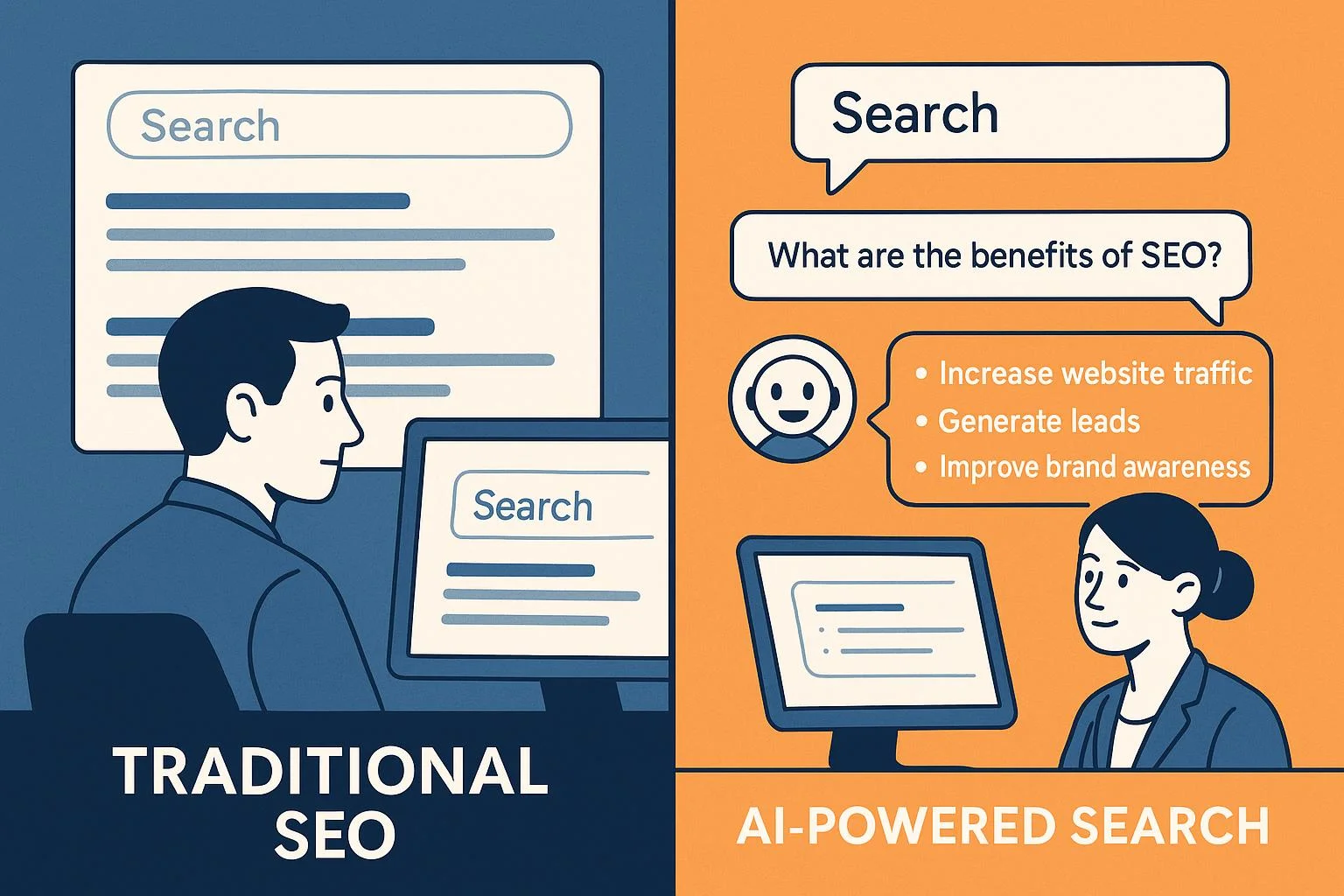
As AI-powered search engines gain popularity, businesses face a new challenge: understanding the difference between traditional Search Engine Optimization (SEO) and Generative Engine Optimization (GEO). While both disciplines aim to improve online visibility, they operate on fundamentally different principles and require distinct strategies.
What is SEO?
Search Engine Optimization (SEO) is the practice of improving your website's visibility in traditional search engine results pages (SERPs) like Google, Bing, and Yahoo. SEO has been the cornerstone of digital marketing for over two decades, focusing on ranking higher for specific keywords and phrases.
Traditional SEO relies on several key factors including keyword optimization, backlink profiles, technical website performance, user experience signals, and content quality. Search engines use complex algorithms to crawl, index, and rank billions of web pages based on relevance and authority.
What is GEO?
Generative Engine Optimization (GEO) is the emerging practice of optimizing your digital presence to be discovered, cited, and recommended by AI-powered search engines and large language models like ChatGPT, Perplexity, Google's AI Overviews, and Claude.
Unlike traditional search engines that display a list of ranked results, generative AI systems synthesize information from multiple sources to create natural language responses. GEO focuses on being the source that AI systems cite and recommend when users ask questions related to your industry.
Key Differences at a Glance
| Aspect | SEO | GEO |
|---|---|---|
| Goal | Rank in search results | Be cited by AI systems |
| Content Style | Keyword-focused | Conversational, Q&A format |
| Authority Signals | Backlinks, domain authority | Citations, reviews, mentions |
| User Experience | Click-through to website | Direct answers in AI response |
Deep Dive: The Core Differences
To truly understand how to optimize for both SEO and GEO, we need to examine the fundamental differences in how these systems work and what they prioritize.
Content Structure and Format
Traditional SEO favors content structured around specific keywords and topics. You create pages targeting "best CRM software" or "how to improve email deliverability" with the goal of ranking for those exact phrases. Content is optimized for both search engine crawlers and human readers who click through from search results.
GEO, by contrast, prioritizes content that directly answers questions in a conversational format. AI systems look for clear, authoritative answers they can synthesize and cite. This means your content needs to be structured more like a knowledge base than a marketing page—comprehensive, factual, and directly addressing user questions without excessive promotional language.
Authority and Trust Signals
SEO has long relied on backlinks as the primary authority signal. A link from a high-authority domain passes "link juice" and helps your pages rank higher. Domain age, technical optimization, and user engagement metrics also factor into SEO rankings.
GEO uses a broader set of authority signals. While backlinks still matter, AI systems also heavily weight citations in reputable publications, mentions in industry discussions, customer reviews and testimonials, social proof, and the overall reputation of your brand across the internet. Being mentioned positively in contexts where AI systems train or search is crucial for GEO success.
User Intent and Journey
In traditional SEO, users see a list of results, evaluate titles and descriptions, click through to websites, and navigate to find information. The goal is to rank high enough to earn clicks, then convert those visitors on your site.
With GEO, the user experience is fundamentally different. AI systems provide direct answers, often without the user ever visiting your website. Your goal isn't necessarily to drive traffic—it's to be the source the AI cites and recommends. This requires a shift in thinking about success metrics and conversion strategies.
How SEO and GEO Work Together
The good news is that SEO and GEO aren't mutually exclusive—they're complementary strategies that work together to maximize your online visibility. Many GEO best practices, such as creating high-quality content and building authority, also benefit your traditional SEO efforts.
A strong SEO foundation makes GEO implementation easier. If your website already has good technical SEO, quality content, and authoritative backlinks, you're well-positioned to expand into GEO. The key is understanding where the strategies diverge and adapting your approach accordingly.
Overlapping Best Practices
Several optimization strategies benefit both SEO and GEO. Creating comprehensive, high-quality content that thoroughly addresses topics helps you rank in traditional search and get cited by AI systems. Building authoritative backlinks from reputable sources signals trust to both Google's algorithm and AI platforms. Implementing structured data and schema markup helps search engines and AI systems understand your content. Maintaining an active, positive online presence across multiple platforms builds authority for both SEO and GEO.
When to Focus on SEO vs GEO
For most businesses, the answer isn't "either/or" but "both." However, the relative importance of each may vary based on your industry, target audience, and business goals.
Prioritize Traditional SEO If:
Your target audience primarily uses traditional search engines and hasn't yet adopted AI assistants for research. Your industry has high commercial intent keywords where users are actively searching to make purchases. You rely heavily on organic search traffic for conversions and have optimized landing pages. Your business model depends on users visiting your website to complete transactions or consume content. You operate in a local market where Google Maps and local search are primary discovery channels.
Prioritize GEO If:
Your audience consists of early adopters, tech-savvy professionals, or younger demographics who actively use AI assistants. Your business benefits from being recommended rather than discovered through search—such as professional services, consulting, or B2B solutions. You operate in an information-heavy industry where users ask complex questions that AI can synthesize—like healthcare, legal, finance, or technology. Your brand strength matters more than individual product rankings. You're in a competitive SEO landscape where traditional rankings are difficult to achieve.
The Balanced Approach for Most Businesses
For the majority of businesses, the optimal strategy is an integrated approach that addresses both SEO and GEO simultaneously. Start with a solid SEO foundation—good technical optimization, quality content, and backlink building. Then layer on GEO-specific tactics like conversational content, FAQ sections, schema markup, and authority building across multiple platforms. Monitor your visibility on both traditional search engines and AI platforms, adjusting your strategy based on where your target audience is searching and where you see the best return on investment.
The Future: Integrated Search Optimization
As AI becomes more integrated into traditional search engines (like Google's AI Overviews), the line between SEO and GEO will continue to blur. Forward-thinking businesses are already adopting an integrated approach that optimizes for both traditional and AI-powered search simultaneously.
This integrated strategy focuses on creating genuinely valuable content, building authentic authority, and providing the best possible answers to user questions—regardless of how those users are searching.
Conclusion
Understanding the difference between SEO and GEO is crucial for modern digital marketing success. While traditional SEO remains important, the rise of AI-powered search means businesses must also invest in GEO to maintain and grow their online visibility.
The businesses that thrive in the coming years will be those that successfully integrate both strategies, creating content and building authority that works across all search platforms—traditional and AI-powered alike.